

Lead a project in a flexible, remote AI safety fellowship
Find world-class talent committed to reducing risk from advanced AI.
SPAR matches researchers and organizations with top talent across the world for flexible, three-month projects on AI risk. Many fellows go on to work full-time on reducing AI risk.
Apply as a mentor Apply as an organization
Mentor and organization applications for Spring 2027 are open until November 30.


New in Spring 2027
You can now propose non-research projects
Starting this round, we’re also accepting more hands-on projects in areas like communications, fieldbuilding, and AI policy.
-
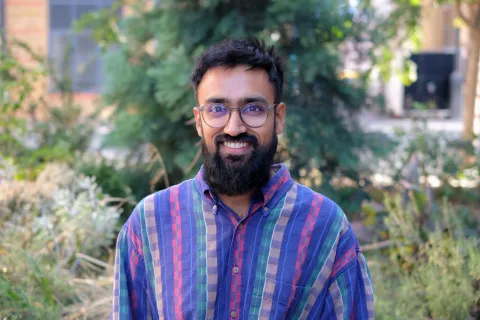 Rishub Jain CEO of Sampura Research, Tailwind grantee, ex-Google DeepMind
“Without SPAR, Sampura Research would not exist. SPAR was the only fellowship that accepted me as a mentor at the time, and the only one that allowed for large well-funded group projects. It was the most fulfilling work I had done that year, and revealed how talented and motivated researchers are outside labs, directly leading me to leave Google DeepMind and start an org. We have immediately hired 3 past SPAR mentees, dramatically speeding up what we could accomplish early in our org.”
-
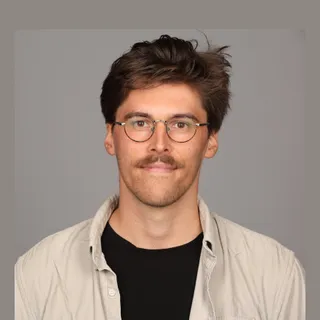 Andrew Draganov Research Lead, Arcadia Impact
“Mentoring with SPAR in spring 2026 gave me the chance to work closely with a small group of ambitious people. After the project I encouraged two of the Fellows to apply for our open roles at the alignment team at Arcadia Impact. Both now work full time on the team. As a way to get to know highly promising candidates, SPAR proved to be a successful path for our team.”
Our mentors work at

What is SPAR?
SPAR is a fully-remote program pairing fellows with professionals addressing risks from AI to work together on impactful projects. Fellows get guidance, and mentors get world-class talent for their projects.
- Mentors can choose to commit anywhere from 2-10 hours/week.
- The program runs for 3 months with options for extension, culminating in a Demo Day attended by top AI safety orgs.
- We look for mentors working on large-scale risks from advanced AI, with a strong theory of change for how their project tackles them. Past mentors include organization leaders and faculty, as well as early-career researchers whose SPAR teams did excellent work.
What kinds of projects does SPAR host?
SPAR supports a broad range of projects and research that we think is helpful for mitigating the risks posed by advanced AI, including but not limited to:
We are actively looking for more work on
-
Misalignment science
Understanding how and why models end up misaligned, rather than tuning a metric on current systems.
- Explaining observed failures, such as why some models fake alignment and others don't
- Showing a safety method is weaker than claimed, for example chain-of-thought obfuscation or eval awareness inflating safety scores
- Finding effects our current frameworks don't predict, such as emergent misalignment
- Working out how to measure things like reward-seeking
- Building realistic model organisms (deliberately misaligned models we can study)
-
AI policy
Policy work that reduces large-scale risks from advanced AI at the federal, state and international levels.
We prioritize mentors with a clear theory of change for how policy changes and who the key stakeholders are. Our top priorities are ambitious US domestic policy and US-China work.
- Drafting legislative proposals and national security analysis on pacing frontier AI development
- Research that supports safety-case review, export control enforcement and model weight security
- US-China work, international agreements and arms control, the role of middle powers, and compute monitoring and hardware verification (EU policy projects are also welcome)
- Drafting, analyzing and implementing state AI legislation
- Policy briefs and explainers that make research usable for its audience
- Research that produces public evidence of emerging risks
-
Macrostrategy and AGI preparedness
Conceptual and strategic research on getting through the transition to advanced AI well.
- Dynamics of an intelligence explosion
- AI-enabled concentration of power
- Institutions for a world with advanced AI
-
AI incident detection
Finding, reporting and analyzing harmful or misaligned AI behavior in the wild.
- Monitoring agent transcripts and logs at scale
- Forensic analysis of AI incidents
- Incident reporting systems and databases
- Early-warning signals for new failure types
-
Communications and public understanding
Communicating the state of AI and its risks clearly and accurately, to the public and other key audiences.
- In-depth public reports on notable AI incidents
- Video explainers that make technical safety results accessible
- Explainers on frontier AI companies' policy positions and lobbying
-
AI character and model values
What values, dispositions and personas models have, how training shapes them, how stable they are, and how this might carry over to future models.
- Model specs
- Persona drift
- Character training and its side effects
-
Fieldbuilding
Work that grows the AI safety field and strengthens its talent pipeline and institutions. These are often generalist projects that draw on skills in operations, program design and outreach.
- Designing and piloting a course, reading group or workshop for people new to AI safety
- Supporting new AI safety groups at universities, or in regions that have few of them
- Mapping the talent needs of AI safety organizations and where current programs fall short
- Evaluating a fellowship, course or event series, for example by surveying its alumni
- Career guides and onboarding resources for people entering AI safety mid-career
- Shared tools and operations playbooks that small AI safety organizations can reuse
We are also excited about
Theory of learning and generalization
Mathematical accounts of what training produces and why, aimed at predictions or guarantees that will hold for future systems.
Examples:
- Singular learning theory and developmental interpretability
- Heuristic explanations and low-probability estimation
- Computational mechanics of internal representations
- Theoretical guarantees for oversight methods such as debate
Multi-agent safety
Risks that only show up when many AI agents act together, which testing one model at a time misses. We prioritize work tied to catastrophic outcomes over abstract game-theory setups and agent security problems such as prompt injection.
Examples:
- Collusion between AI agents, including monitors colluding with the agents they oversee and hidden coordination through steganography
- Catching sabotage spread across many small actions by many agents
- Dangerous capabilities or behaviors that emerge when many agents interact, and how to detect them early
Hardware-enabled verification and compute governance
Technical tools that let parties verify claims about AI development without having to trust each other.
Examples:
- On-chip mechanisms that attest how AI chips are used
- Location and usage attestation
- Cryptography for verifying training runs and model properties
- Privacy-preserving audits
Securing model weights
Protecting model weights and AI infrastructure, and making models robust to adversarial misuse.
Examples:
- Securing weights and algorithms against theft by well-resourced attackers
- Red-teaming lab infrastructure
- Preventing distillation
AI uplift for safety research
Using AI agents to do safety research, and checking that their output can be trusted.
Examples:
- Training interventions that differentially speed up alignment work
- Methods for red-teaming the results of automated alignment work
- Failure modes of automated alignment work
- Detecting sandbagging (deliberate underperformance) on safety tasks
Safety cases and third-party auditing
Methods that let people outside a lab check its claims that a model is safe to train further or deploy.
Examples:
- Adversarially reviewing safety cases
- Verifying what labs report, such as compute use and evaluation results
- Auditing games that test whether an audit catches a deliberately hidden problem
Standards and lab accountability
Analyzing how frontier AI companies manage risk and designing better standards. Each project should name who will use the work and what decision or practice it aims to change.
Examples:
- Reviews of frontier safety policies, corporate governance structures and model cards
- Risk management analyses that compare companies' practices
- Public assessments and trackers that rate companies against safety standards
Digital minds
Model welfare, moral status and AI introspection.
Examples:
- Methods for evaluating whether model self-reports are reliable
- Welfare-relevant behaviors and preferences in models
- Frameworks for moral status under uncertainty
Funding strategy
Analyzing the value of interventions in AI safety and surfacing new or underrated ones.
Examples:
- Economic analysis and design of funding mechanisms
- Supporting grant investigations
We're also happy to consider projects outside these lists.
Host projects as an organization
Organizations can now apply once for everyone on their team who wants to mentor, instead of each mentor applying on their own.
- 1
One point of contact applies
They fill out one form, listing who wants to mentor, roughly how much time each can give, and the broad directions their projects might take.
- 2
Teammates add their projects
Each mentor adds their own projects through a shared link. These descriptions can be less detailed than a standard mentor application.
- 3
Mentors select their fellows
Each project receives around 100 applications, already reviewed with standardized work tests and AI evaluations. Each mentor decides whether any applicant meets their bar.
- Nobody commits in advance to taking fellows.
- Mentoring can be split across your team.
- Fellows can participate part-time or full-time, and your organization can choose to offer them a stipend.
Why apply?
-
Project support
Gain access to qualified applicants to advance your projects. Who you choose to work with is entirely up to you, and there's no commitment to take on any fellows if none are a good fit.
-
Funding
SPAR projects can apply for grants of up to $30k for expenses like compute and API access.
-
Find long-term collaborators
Many SPAR mentors end up inviting their fellows back to work on additional projects after the program ends, or hiring them to their teams.
-
Build your field
Help more skilled people move into crucial work like yours.
Am I eligible?
We typically accept applications from people with AI safety or biosecurity experience matching or exceeding that of a late PhD student or a MATS scholar. We're excited to receive applications in technical AI safety, policy and governance, biosecurity, strategy, communications and fieldbuilding.
If you are a senior graduate student, postdoc, academic faculty member, or professional at a lab, you can suggest any project within SPAR's focus areas. If you are a junior graduate student or a MATS scholar, your project should be adjacent to your existing research focus.
If you don't fit any of these categories, it must be very clear that you have legible credentials to lead the project you propose. We accept undergraduate applicants to mentor only in exceptional circumstances.
FAQ
Is my project a good fit?
Your project may be a good fit if:
- It can be scoped for 3 months of work at 5-40 hr/week/fellow, at a team size you're comfortable supervising
- It has a strong theory of change for tackling large-scale risks from advanced AI
- It's focused on AI technical safety, AI policy and governance, AI strategy, AI security, biosecurity, communications or fieldbuilding
For biosecurity projects, we don't require projects to be focused on AI risks specifically, but we do require their theories of change to potentially be helpful in preventing or mitigating AI-enabled bioattacks (exclusively or in addition to other threats). Given the remote nature of the program, we typically won't accept projects involving laboratory work.
See here for examples of projects SPAR has accepted in the past.
How qualified are typical SPAR applicants?
Fall 2026 had about 6,000 applicants, roughly a third each undergraduates, graduate students and mid-career professionals. Acceptance rate was about 14%.
- Graduate student with strong publication record and 2-4 years research experience in ML or in technology policy
- Top-tier undergraduate with research internships at major companies or labs
- Mid-career professional with 5-10 years in software or data science, transitioning to AI safety
We expect applicants to have some relevant technical background to the projects at hand, but not all projects will receive applicants with deep research experience.
What if I don't get any applicants I'm satisfied with?
You can just withdraw from the program. Submitting a SPAR project doesn't create any commitment to move forward unless you find mentees you're excited about. However, we find withdrawals are rare.
How will mentees be assigned to my project?
Mentees will apply to your project and answer any custom application questions you've included. You'll review applications, including scheduling any interviews or trial tasks you'd like. Please note you may need to set aside substantial time for application review—in Fall 2025, the median project received 62 applications, while the top 20% received over 100.
After reviewing applications, you'll send us a ranked shortlist of candidates, and applicants will also submit a preference ranking among projects they've applied to. We'll run an algorithm that matches mentees with projects based on both mentor and mentee preferences, as well as other factors like ensuring no one gets assigned more hours of work than they're available for. While this means you're not guaranteed to be matched with any given applicant, we will never assign you mentees who weren't on your shortlist.
What does SPAR expect of mentors?
- Review mentee applications by SPAR's deadlines, including arranging any interviews or assessments you're interested in. (The SPAR team will provide resources and guidance for managing this process.)
- Coordinate weekly meetings with your project team.
- Have weekly or biweekly 1:1s with each of your mentees. (There's also an option to give high-level asynchronous feedback only, though our bar for accepting these projects is higher.)
- Be reasonably accessible to your mentees over a platform like Slack, Discord, Signal, Whatsapp, etc.
- Set up a task management system to coordinate your mentees' to-dos.
- Anything else that's needed to ensure your project stays on track.
The mentor application asks you to commit to a level of involvement per mentee, from 5hr/wk/mentee to high-level asynchronous feedback. Whatever commitment you make, we ask that you honor it.
How many mentees can my project take on?
SPAR projects can have as few as one mentee or as many as you'd like. If you accept a particularly large team, the SPAR team may check in to ensure you can commit appropriate time to supervising each mentee.
Can there be more than one mentor on a project?
Yes, mentors are welcome to team up on projects!
Can one mentor run multiple projects?
Yes! You can run as many SPAR projects as you'd like, as long as you can commit appropriate time to your mentees. You can also submit many project proposals and later decide which ones to go forward with, based on the received interest and quality of applications.
Lead a project in a flexible, remote AI safety fellowship
Apply as a mentor Apply as an organization
Mentor and organization applications for Spring 2027 are open until November 30.